Skin and cuticle
Emollients and soothing agents work on surfaces quickly. Softer cuticles, less dryness, less irritation around the nail fold. This is the fast, real benefit.
KlaroNail® is an easy-to-use spray solution designed to support healthier-looking toenails and help address the everyday concerns associated with stubborn toenail fungus. Its targeted application makes it simple to incorporate into your daily foot-care routine.
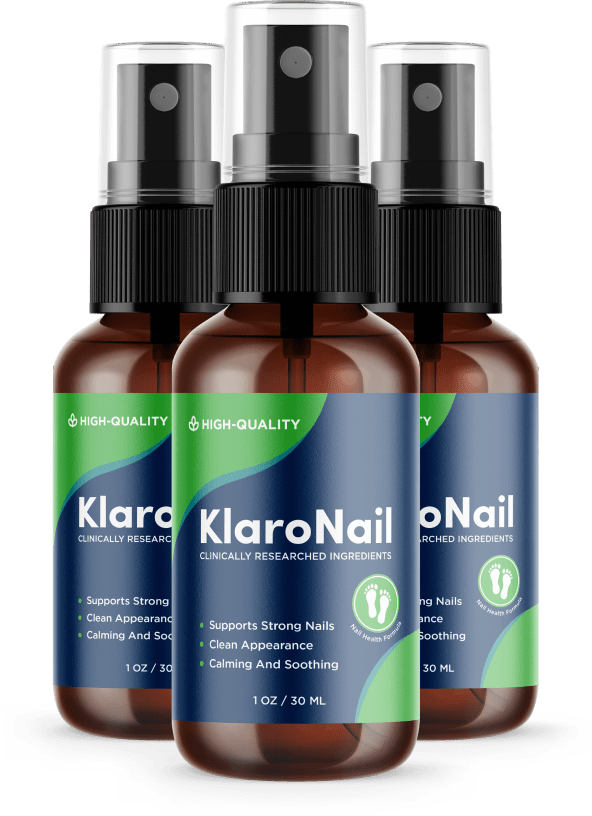
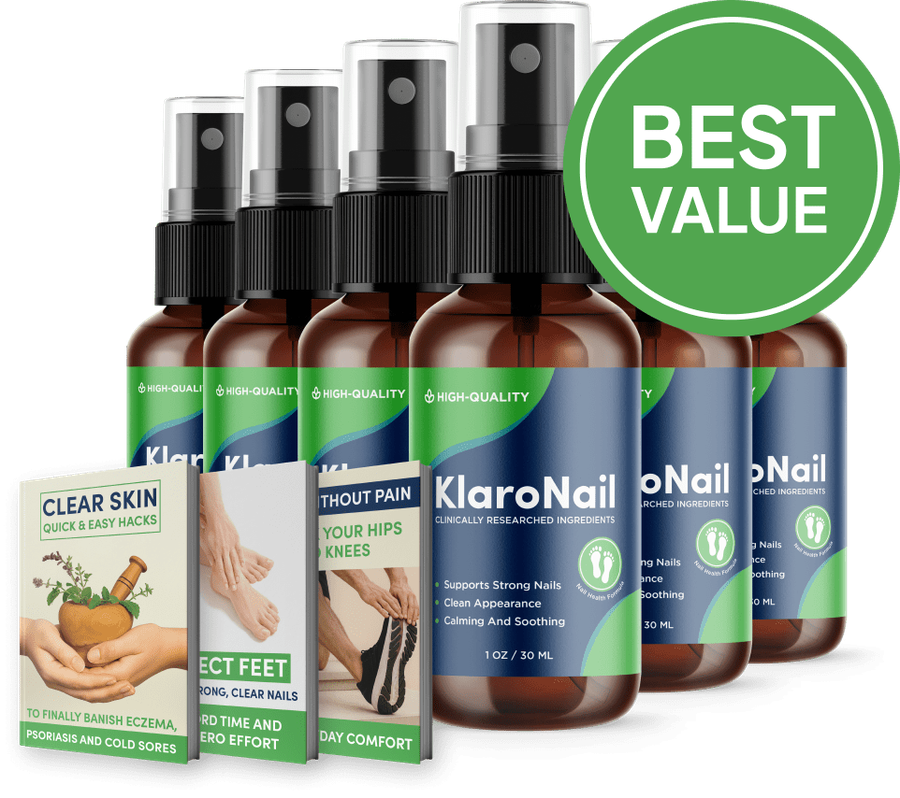
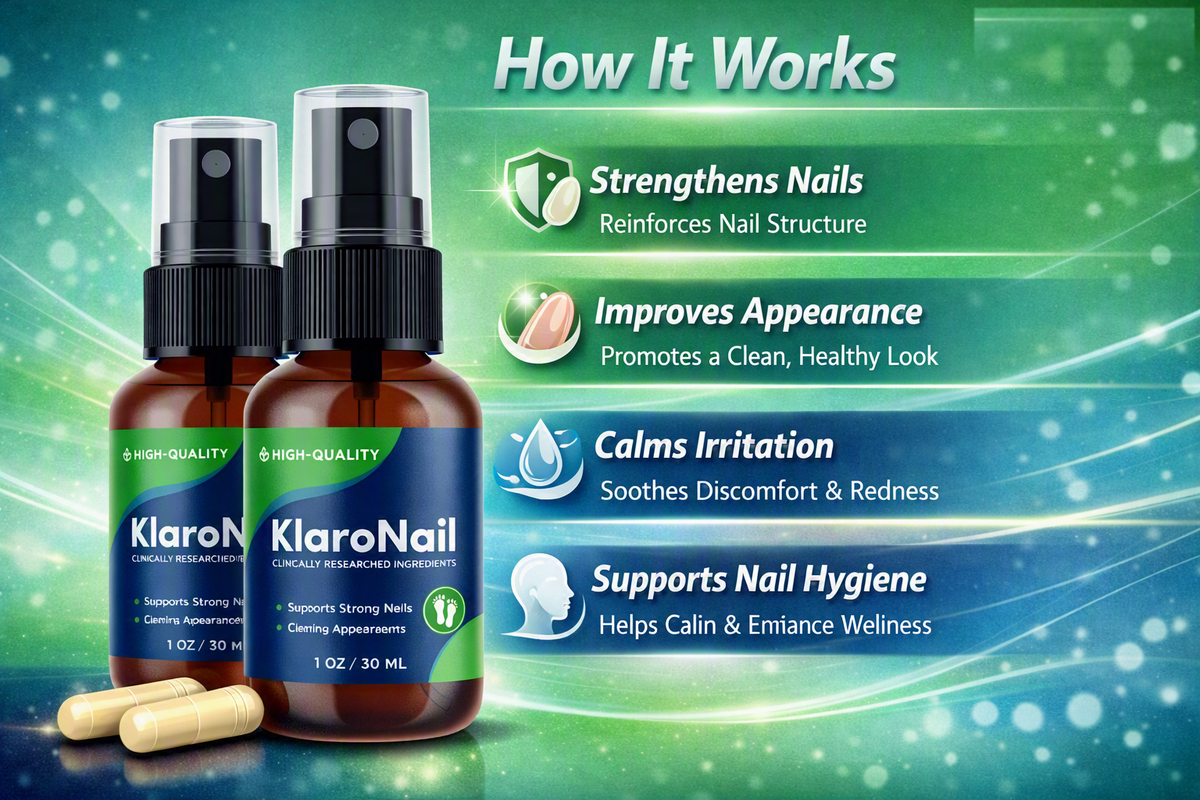
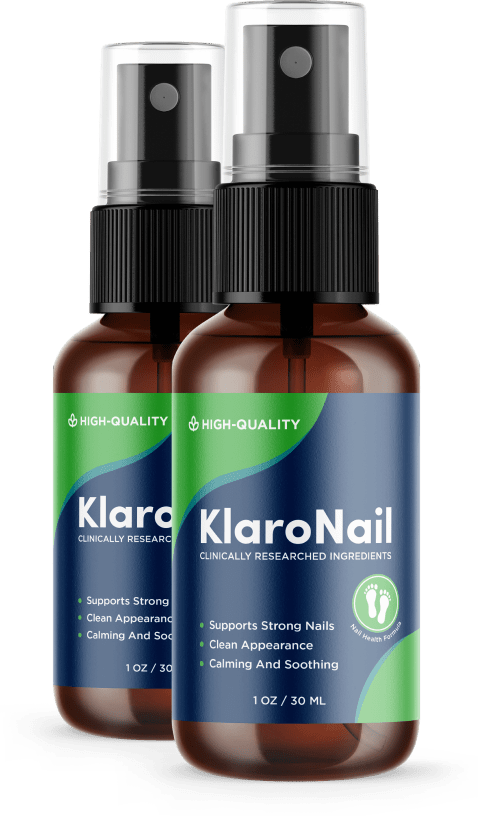
KlaroNail is a topical spray for fingernails and toenails, supplied in 1 oz (30 mL) amber glass bottles with a fine-mist pump. The label states cosmetic claims: supports strong nails, clean appearance, calming and soothing. It is applied to clean, dry nails and the surrounding skin, and the seller positions it as a daily routine rather than a course of treatment.
It is a cosmetic product, not a medicine. It is not FDA-approved, it does not claim to treat nail fungus, and it legally cannot. Packages run $138 to $294 with a 60-day money-back guarantee counted from purchase date. The most important fact about it has nothing to do with the formula: toenails grow about 1–1.6 mm a month, so the nail you can see today will take twelve to eighteen months to be fully replaced.
Read this before you buy. KlaroNail is a cosmetic product. Its label claims — supports strong nails, clean appearance, calming and soothing — are cosmetic claims, not antifungal ones, and that wording is chosen deliberately. If your nail is thickened, crumbling or discoloured, the cause may be a fungal infection, psoriasis, an old injury, or something that needs urgent attention. A cosmetic spray does not treat any of them. If you have diabetes, neuropathy, poor circulation or a suppressed immune system, a nail or foot problem is a podiatry appointment, not a shopping decision.
Strip away the marketing and the proposition is straightforward: a botanical oil blend in a spray bottle, applied to the nail and the skin around it, aimed at people who want their nails to look and feel better. The amber glass is a sensible choice rather than a decorative one — essential oils oxidise on exposure to light, and clear plastic would shorten the shelf life of exactly the ingredients being sold.
What it is not is a treatment for onychomycosis. That word covers fungal infection of the nail, and it is a medical diagnosis with medical treatments. The gap between what this category of product is marketed around and what it is legally permitted to claim is wide, and it is deliberately never spelled out. Our page on what KlaroNail is works through that distinction properly.
None of that makes it worthless. Cuticle conditioning, skin hydration and reduced brittleness are real, achievable benefits, and for people whose nails are dry and splitting rather than infected, a well-made oil blend is a reasonable purchase. The problem is only ever the mismatch between the problem you have and the product you are being shown.
This single chart is more useful than any ingredient list. A nail does not heal — it grows out and gets replaced. Everything else follows from that.
A damaged or discoloured nail does not heal. It grows out and is replaced from the base. That means the honest timeline for any visible change to the nail plate itself is set by biology, not by a formula.
Growth rates slow with age, in cold weather and with reduced circulation. This is why before-and-after photos taken four weeks apart cannot be showing new nail growth — a toenail has moved about a millimetre and a half in that time. What can change quickly is the surrounding skin, the cuticle and the surface appearance of the existing nail. Those are worth having; they are just not the same claim.
Emollients and soothing agents work on surfaces quickly. Softer cuticles, less dryness, less irritation around the nail fold. This is the fast, real benefit.
Oils change how the existing nail plate reflects light, so nails look less dull. Genuine, cosmetic, and reversed if you stop.
Only new nail emerging from the matrix can be different from the old. For a toenail that is a year or more — well beyond any refund window.
Three routes carry the plausible part of a topical nail spray, and one obstacle limits all of them.
Conditioning the nail plate and cuticle. Emollient oils reduce water loss from the nail and soften the cuticle, which reduces splitting and peeling caused by dryness. This is real, it is fast, and it is entirely cosmetic.
Caring for the surrounding skin. Soothing agents calm the nail folds and the skin between the toes. Since a lot of nail-adjacent discomfort is actually skin discomfort, this is a genuine benefit that gets mislabelled as a nail benefit.
Surface hygiene. Many botanical oils show antimicrobial activity in laboratory conditions, and keeping the surface clean and dry is sound practice.
The obstacle: the nail plate is a dense, tightly packed keratin barrier specifically evolved to keep things out. It is the reason prescription nail treatments needed entirely new molecules to be developed, and the reason most over-the-counter antifungals state on the label that they are not effective on nails. An oil sprayed on the surface faces that same wall.
Almost every disappointed review of a product like this traces back to a buyer who thought they were on tier two or three. Knowing which rung you are standing on is most of the decision.
Claims are limited to appearance, cleanliness, hydration and comfort — wording such as “supports strong nails”, “clean appearance” and “calming and soothing”. No approval process, no efficacy requirement, no active ingredient percentage. Ingredients must be listed on the package.
Contains a recognised active such as undecylenic acid, tolnaftate or clotrimazole at a set percentage, and carries a Drug Facts panel. Legally permitted to make antifungal claims for skin conditions — though most OTC actives are specifically labelled as not effective on the nail itself.
Topical efinaconazole, tavaborole or ciclopirox, or oral terbinafine or itraconazole. Prescribed after a clinician confirms the diagnosis, often with a nail sample sent for testing. This is the only tier with cure rates measured in controlled trials.
How to check for yourself, in ten seconds. Turn the bottle over. If you see a Drug Facts panel with an active ingredient and a percentage, it is a drug. If you see only an ingredient list — typically headed “Ingredients” and written in INCI names — it is a cosmetic. There is no third possibility, and no amount of “clinically researched” language on the front changes which panel is on the back.
The meter on each row measures one thing: how much published human evidence supports that ingredient for nails — not for skin generally, not for antimicrobial activity in a petri dish. Two rows score well. Most sit low, and the reason is usually the same: the nail plate.
The only ingredient in this whole list that is a recognised over-the-counter antifungal drug rather than a cosmetic. If a product contains it at monograph strength it must be labelled as a drug, with a Drug Facts panel and an active ingredient percentage. Its absence from a label is informative: it means the product is not making, and cannot make, an antifungal claim.
The one botanical here with actual onychomycosis trial data. Small studies comparing topical tea tree oil against conventional antifungals reported some improvement in nail appearance, with cure rates well below prescription treatment. Concentration matters enormously, and it is also one of the more common causes of allergic contact dermatitis among essential oils.
A genuine keratolytic with real clinical use in nail care, typically at 20 to 40 percent, where it softens and thins the nail plate. In dermatology it is used to help other agents penetrate. At the low percentages typical of a cosmetic spray it is a humectant rather than a keratolytic, which is a different and much smaller job.
Genuinely effective at softening cuticles and reducing the brittleness that comes from dehydration. This is real, modest and entirely cosmetic. Emollients sit on and around the nail plate; they do not travel through it, and they do nothing to a fungal infection underneath.
Widely used in nail and cuticle products as an antioxidant and conditioning agent. The evidence for improving nail health specifically is thin, though its role in cosmetic formulation stability is well established. It is a reasonable inclusion rather than an active one.
Has laboratory antifungal activity against several species, as many essential oils do. Laboratory activity in a petri dish is a long way from clinical effect through a nail plate, and that gap is where most botanical nail marketing lives. Also a recognised contact sensitiser.
Well documented for soothing irritated skin and supporting barrier hydration. That is a legitimate benefit for the skin around a nail, and it is what the “calming and soothing” label claim is most likely resting on. It has no meaningful nail-plate evidence.
Antimicrobial in laboratory conditions and traditionally used for dental pain. There is no clinical trial evidence for nail conditions, and eugenol is a well-recognised contact allergen that appears on standard patch-test panels.
These produce a cooling, tingling sensation that many people interpret as the product working. That sensation is a nerve response, not evidence of activity in the nail. Camphor in particular is toxic if swallowed and is not appropriate around young children.
Contribute fragrance and laboratory-level antimicrobial activity. Citrus oils can also cause photosensitivity on skin. Their presence generally reflects scent and marketing more than measured nail benefit.
An important caveat about this list. The materials supplied to us for KlaroNail state “clinically researched ingredients” on the label but do not include a readable ingredient panel. The rows above therefore describe the ingredient classes used across this product category, so you can read your own bottle intelligently — they are not a claim about what is specifically in KlaroNail. Cosmetics sold in the US must carry a full ingredient list on the package, so the answer is on the bottle when it arrives. If you want it before you order, email customer service and ask for the INCI list in writing. See the full ingredient page for how to read one.
Marketing in this category promises transformation. What a well-made botanical oil spray can reasonably deliver is smaller, real, and worth stating accurately.
We ran the eight checks a sceptical buyer would run, comparing what this reference publishes against what is typically available on other KlaroNail pages.
| Buyer check | Published here | Typical KlaroNail page |
|---|---|---|
| Cosmetic vs drug claim | Explained, with the label test | Left deliberately blurred |
| “FDA approved” claim | Corrected — no cosmetic is | Displayed as a trust badge |
| Nail growth timeline | Published, in months | Not mentioned |
| Fungal infection guidance | Points to a clinician | Implied without claiming |
| Contact allergy risk | Named oils, patch-test advice | Not mentioned |
| Diabetes warning | Stated prominently | Rarely addressed |
| Ingredient panel | Reported as unavailable | Described without a panel |
| Refund steps | Actual process, with caveats | “No questions asked” badge |
Reflects patterns typical of marketing pages in this product category as reviewed in August 2026. Pages change — verify current claims yourself.
“My nails were splitting at the tips from too much washing up, not from anything medical. Three weeks of this and the cuticles are genuinely better. I bought it knowing what it was, which I think is why I am happy with it.”

“Three stars. Pleasant to use, nice smell, skin around the toes is better. But I bought it for a thick discoloured big toenail and after two months that looks exactly the same. Reading this site afterwards, I now understand why — I wish I had read it first.”

“I am diabetic and this page told me to see a podiatrist before spraying anything on my feet. Turned out the nail was not fungal at all. That advice was worth more to me than the product would have been.”

Testimonials are individual experiences and are not a guarantee of results. Portraits are illustrative stock images, not photographs of the reviewers. There is currently no independent third-party review record for KlaroNail on platforms such as the BBB or Trustpilot — we would rather tell you that than imply a track record that does not yet exist. Read the full independent review.
Here is the tension worth understanding before you choose. Visible new nail growth takes months. Your refund window is 60 days. The package that gives you the best per-bottle price is also the one that commits the most money to a timeline you cannot evaluate inside the guarantee.
60-day supply
$138.00 total + shipping
90-day supply
$177.00 total · free US shipping
180-day supply
$294.00 total · free US shipping



Package pricing verified 2026-08-14 against the official order page. Promotional pricing changes frequently, and “regular price” figures on sales pages are anchors rather than prices anyone has paid — compare per-bottle and per-day cost instead. Confirm your final total, including tax and shipping, before submitting your order.
The guarantee is real. The friendly summary on sales pages is not the policy text, and reading only the badge is how buyers get caught out on day 58.
The 60 days run from your purchase date, not delivery. Your order confirmation email is the record that matters. Diarise day 50.
Contact customer service in writing before you post anything back, and keep a copy. The timestamp is your evidence that you acted in time.
Sales copy often says “keep everything.” Many processors in this space do require a return. Confirm which applies to your order.
A toenail moves about 3 mm in 60 days. You will be deciding on a refund long before you could possibly assess new nail growth. Plan for that.
Before you submit your order: check the checkout page for any pre-selected subscription or upsell option, and confirm the final total including shipping and tax. Note the payment descriptor on your statement may differ from the brand name. Full detail on the refund policy page.
KlaroNail is a topical spray for fingernails and toenails, sold in 1 oz (30 mL) amber glass bottles with a fine-mist pump. Its label claims are cosmetic: supporting strong nails, a clean appearance, and calming and soothing the surrounding skin. It is applied directly to clean, dry nails and the skin around them, typically once or twice daily. It is a cosmetic product rather than a medicine, and it is not FDA-approved. Full detail on the what is KlaroNail page.
No, and it does not claim to. Look carefully at the wording on the bottle: “supports strong nails”, “clean appearance”, “calming and soothing”. Those are cosmetic claims. A product that treated fungal nail infection would have to be a drug, carry a Drug Facts panel and name an active ingredient at a set percentage. Onychomycosis is diagnosed by a clinician, often with a nail clipping sent for testing, and is treated with prescription topical or oral antifungals. If that is what you have, a cosmetic spray is not the answer.
No, and no cosmetic is. The FDA does not approve cosmetic products before sale — there is no pre-market approval and no requirement to demonstrate efficacy. There is also no such thing as an “FDA approved facility”: facilities are registered and subject to inspection, which is a different thing. Any page displaying an “FDA Approved” badge on a cosmetic is making a claim that is not true.
Wash and thoroughly dry the nails and surrounding skin first — drying matters, because trapped moisture is what fungal organisms like. Trim and gently file the nail surface so the product is not sitting on a raised, thickened layer. Spray to lightly cover the nail, the cuticle and the skin around it, including under the free edge of the nail where you can. Let it dry completely before putting on socks or shoes. Most products in this category are used once or twice daily; follow the direction printed on your bottle.
Three packages are offered: two bottles at $138 total ($69 each) plus shipping; three bottles at $177 total ($59 each) with free US shipping; and six bottles at $294 total ($49 each) with free US shipping and bonus digital guides. Sales pages in this category typically display an inflated “regular price” — treat it as an anchor rather than a price anyone has paid. Current pricing is on the KlaroNail official website.
This depends entirely on what you mean by work. The skin and cuticle around the nail can feel different within days, because emollients and soothing agents act on surfaces quickly. The nail plate itself is a different story: toenails grow roughly one to one and a half millimetres a month, so a full toenail takes twelve to eighteen months to replace and a fingernail four to six. No topical product changes that rate. Any before-and-after photograph taken four weeks apart is not showing new nail growth, because there has barely been any.
The main risk with any botanical topical is allergic or irritant contact dermatitis. Tea tree oil, lavender, clove and citrus oils are all recognised contact sensitisers and appear on standard dermatology patch-test panels. Citrus oils can also cause photosensitivity. Patch-test on a small area of forearm skin and wait 24 hours before applying widely. Stop immediately if you get redness, itching, burning or blistering. Keep it away from eyes and mucous membranes, and out of reach of children — camphor and several essential oils are toxic if swallowed.
Ask your doctor or podiatrist first, and treat this as a genuine safety question rather than a formality. Diabetes affects circulation, sensation and immune response in the feet, which means a nail or skin problem that would be trivial in someone else can progress to infection, ulceration and worse. People with diabetes should have foot and nail concerns assessed professionally rather than self-treated with a cosmetic product, and should not use anything that could irritate the skin without guidance.
Yes — 60 days, counted from your purchase date rather than your delivery date. Sales copy in this category often describes it as “no questions asked”. Read the actual policy linked at checkout before relying on that, since many processors in this space do require product to be returned. Full detail on our refund policy page.
Through the KlaroNail official website. No authorised third-party retailer has been identified — not Amazon, not Walmart, not pharmacy chains. Buying elsewhere puts your purchase outside the seller's order records, which is what the 60-day guarantee is administered against, and leaves storage history unverifiable. That matters more than usual for a botanical oil product, since essential oils oxidise with heat and light — which is why the bottle is amber glass.
There is no evidence of that. It is a real cosmetic product in a real bottle at a category-typical price. What we would push back on is the framing rather than the product. Sprays like this are marketed to people searching for fungal nail solutions, while the label itself carefully makes only cosmetic claims. Both things are true at once, and the gap between them is where buyers get disappointed. Our full review works through whether it is worth the money on its actual merits.
If the nail is thickened, crumbling, separating from the nail bed, painful, or changing shape, yes. Around half of abnormal-looking nails are not fungal at all — psoriasis, old trauma, lichen planus and eczema all mimic it, and each needs different management. Most importantly, a dark streak or patch under a nail can occasionally be subungual melanoma, which is treatable when caught early and serious when missed. A clinician can take a nail clipping and get an answer. That is a better use of $138 than any spray.
Clinical reviewer
Podiatric physician with twelve years in clinical practice. Reviews every claim on this site that touches nail pathology, application safety or the differential diagnosis of nail discolouration, and signs off the safety guidance.
Editor
Consumer health editor. Verifies label data, pricing and refund terms against the product packaging and the official order page before anything goes live. More about our process.